Jon Shutt reached out to me earlier this year about an AI content engine. He had founded a product consultancy, Level Up Product, more than a year before, and it had gone almost completely quiet. He did not need help building a product. He needed to figure out how to talk about his own, and then a system to keep doing it. That meant getting his positioning right first, then building the engine: a way to turn twenty years of shipped products into content that sounds like him and brings in clients.
Jon and I came up together at the Associated Press, which is part of how I ended up doing this work. I had seen the kind of product work he does up close, so I knew exactly what we needed to get in front of people.
A year that quietly stalled out
Here is what “quiet” actually looked like. Jon registered Level Up Product in 2024, claimed the accounts, told a few people, and then the momentum stopped.
He could not see a clean way to find the customers who needed him. A demanding day job filled the calendar, the world was loud, and the safe move was to take a back seat.
There was an early setback too. He bid on a consulting opportunity and lost it, because the client wanted a single shop to own product, design, and engineering all at once. After that, looking at what he had already put in, going quiet felt reasonable.
None of that is a talent problem. It is the most common problem I see with real experts: the work is there, but there is no system for talking about it.
How an AI content engine works
An AI content engine is a system, not a magic button. The difference from a blank chatbot is what you feed it. Most people open an empty chat and ask a model to write a post about leadership, and the copy comes out average, because the only raw material is what the model already knew.
I build the opposite. Jon’s engine runs on his own raw material, not whatever the model picked up elsewhere. That is what makes the output specific to his business instead of generic.
The part that changed things for Jon was being able to talk to it instead of type. He works through an idea out loud and gets back a draft he can react to.
Voice prompting was new to him, and it unlocked speed. A writing task that used to take half an hour became a quick story he could talk through in a couple of minutes.
Bergit content engine build for Level Up Product, June 2026
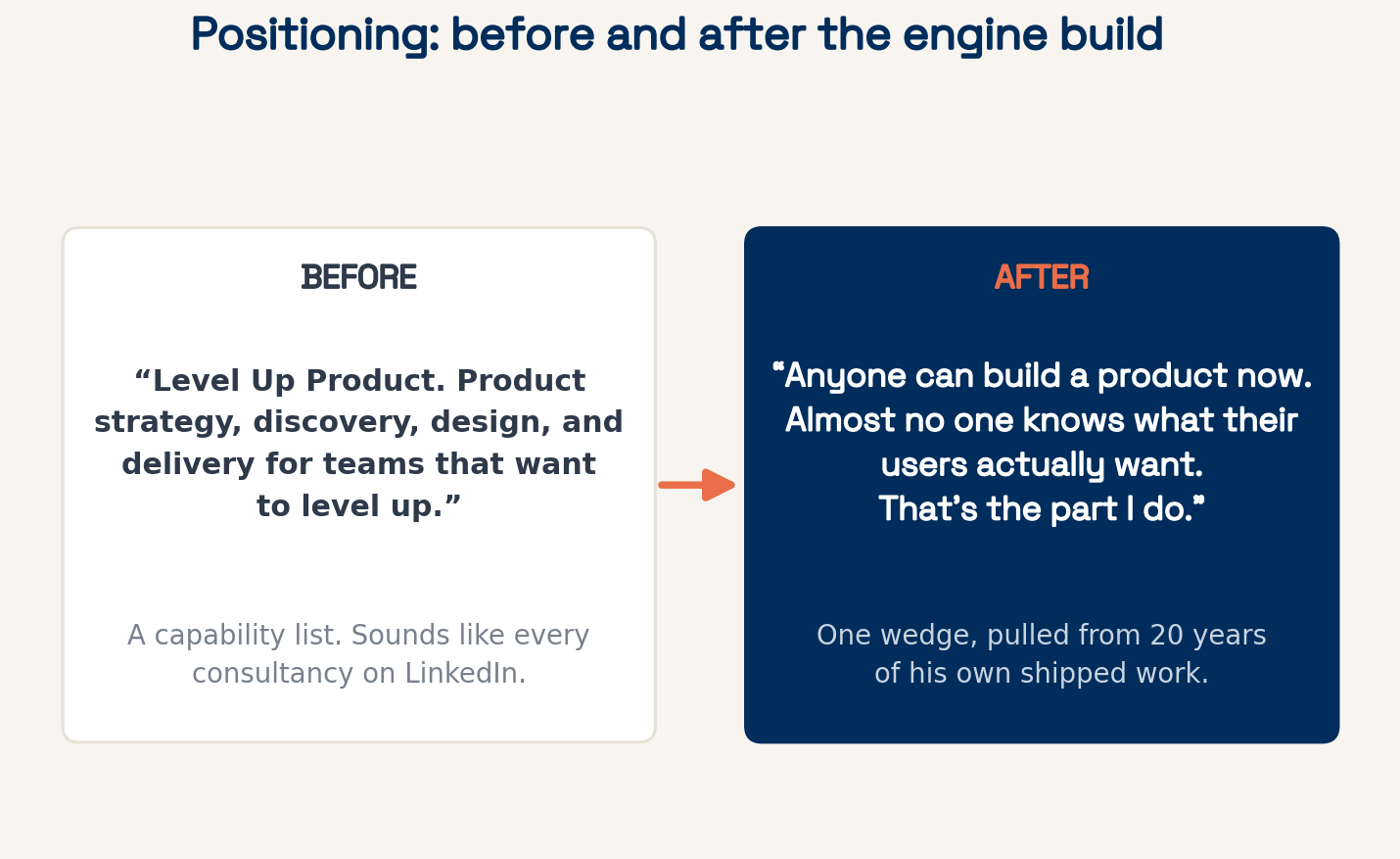
Positioning had to come first
Before any content, we had to lock the positioning. If that foundation is vague, everything the engine produces downstream comes out vague too.
Anyone can build a product now. Almost no one knows what their users actually want. That line became Jon’s wedge, and everything else hangs off it. One line from the work became his favorite: the tools got faster, and the humans did not get easier to understand.
I pulled the wedge out of his own history. At Disney, he rebuilt the page you land on right before you decide to watch something. The team watched real users, listened to where they hesitated, and shipped a new version.
At Perry Street, he rebuilt the profile order inside SCRUFF and Jack’d by asking users what they actually looked at first. The pattern repeated: ask the people before you decide what to build for them.
Building the engine around his voice
Once the positioning held, I built the engine as an agent skill inside Cursor, the same agentic setup I run for my own builds. An agent skill is a set of instructions and reference files the AI follows every time, so the system behaves the same way on post one and post fifty.
The skill carries everything that makes the writing his: his call transcripts, his stories, his style guide, his content roadmap, and the redlines we set during our calls. Some subjects are simply off the table.
Built into it are several quality gates. If a draft breaks a rule, the system rebuilds it before he ever sees it, so he only reviews work that already passed.

It also captured how he actually sounds. On one of our calls, Jon read a draft and reacted to how well the engine had picked up an idea he had never said out loud:
It’s a little creepy that it picked up on this without me even saying it out loud.
The workflow keeps a human in the loop
Here is the actual loop. Jon uses voice dictation to talk to Cursor. He says what he wants out loud, and because the agent skill is loaded, Cursor shapes it into a post in his format and his voice.
From there, he keeps refining it inside Cursor, either by voice or by typing, until it is ready to ship.
The agent handles the easy parts: the drafting, the formatting, the trimming, and the scheduling. It queues posts through Buffer, connected to his personal LinkedIn for now, so scheduling is not one more manual chore.
What it does not handle is the part that matters: why this story, for whom, and what it proves. That stays with Jon. His taste and his direction drive the content, not the agent.
This is also why the writing survives the feed. LinkedIn has said plainly that it is reducing the reach of generic, low-effort content that lacks a real perspective. A system that mass-produces posts gets buried. One that carries a specific human voice does not.
What shipped
By the time we sat down to review everything, Jon’s reaction was the one I was after:
A lot of the edits already feel really close to what I would want anyway. At this point, it’s likely just nitpicking.
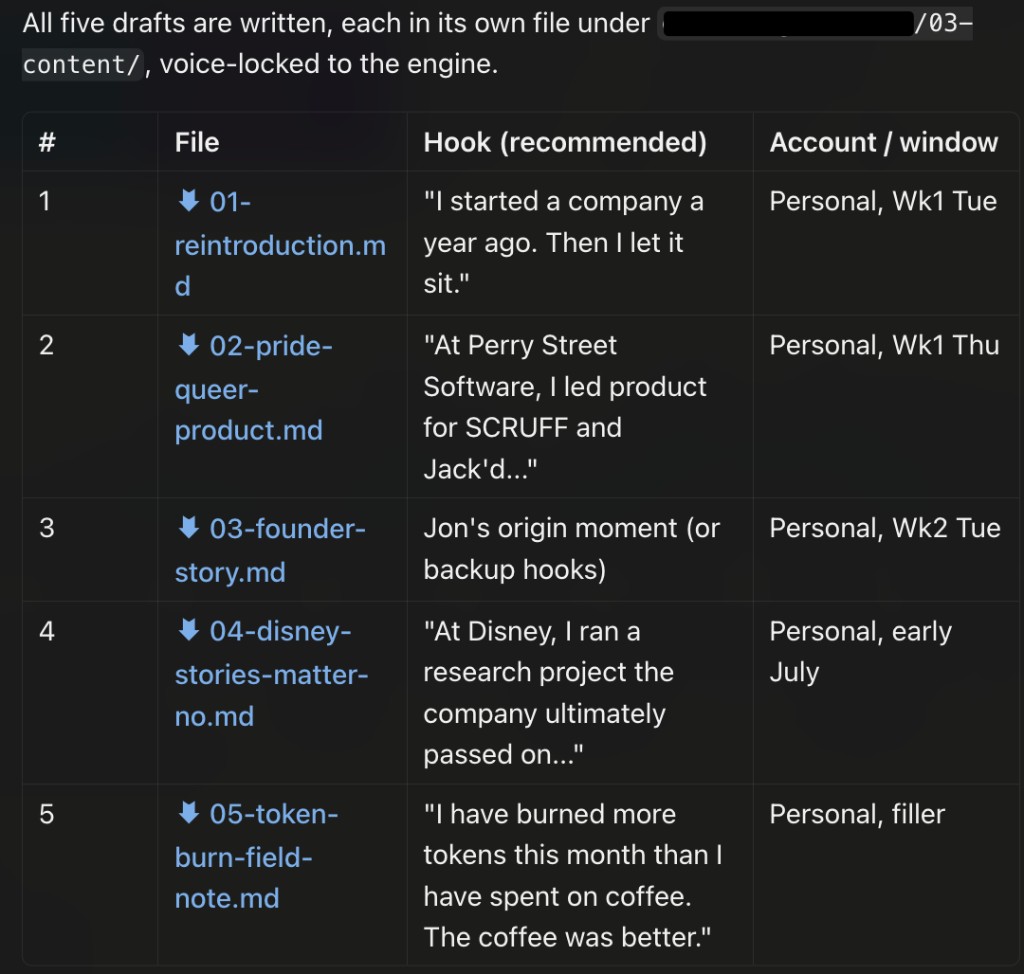
He has five approved posts ready to roll out: a reintroduction, a Pride and queer-product story, his founder story, a Disney research piece, and a short field note. He is running the engine now without me. He also has proposal and invoice templates in his own branding, so the moment a client says yes, he can send a polished, on-brand document without scrambling.
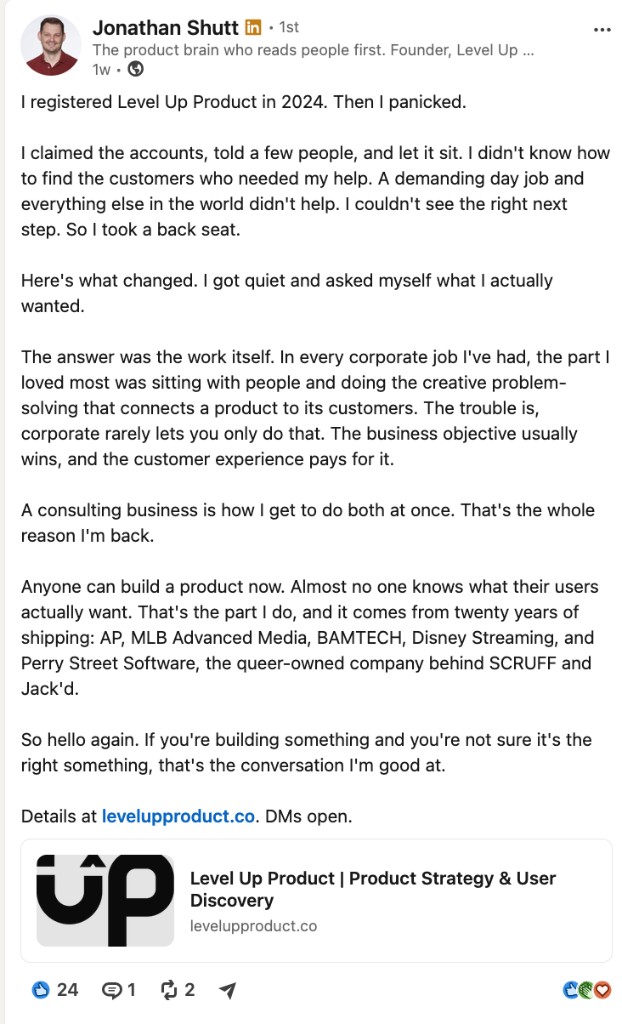
The first post is live. Here is the reintroduction, written through the engine in Jon’s voice, wedge line and all:
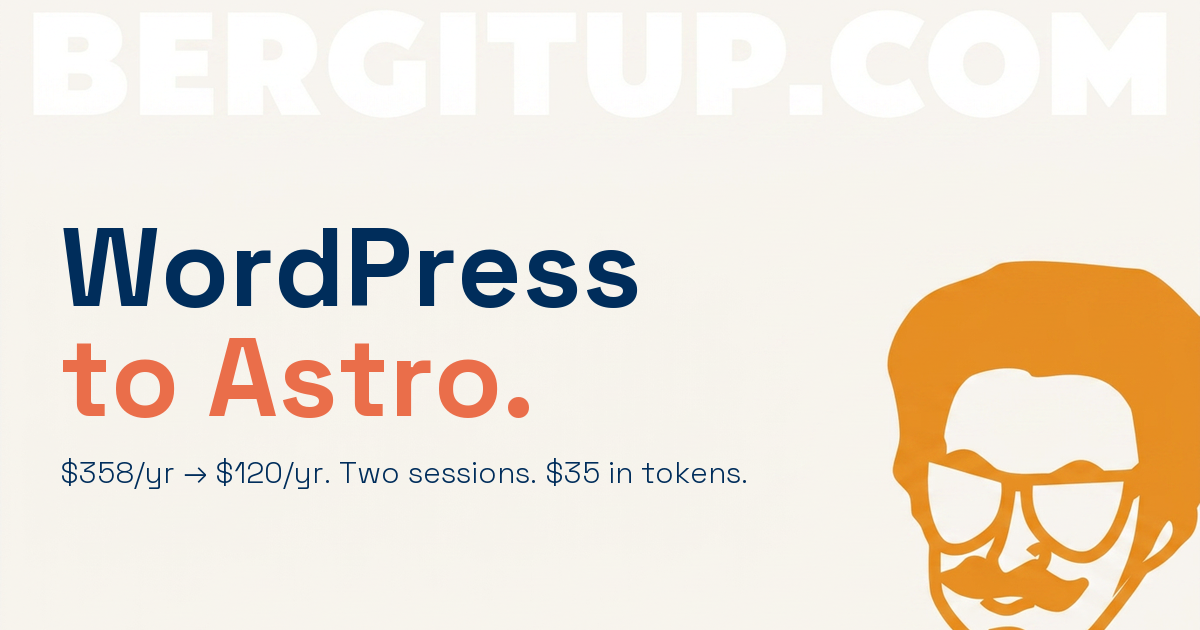
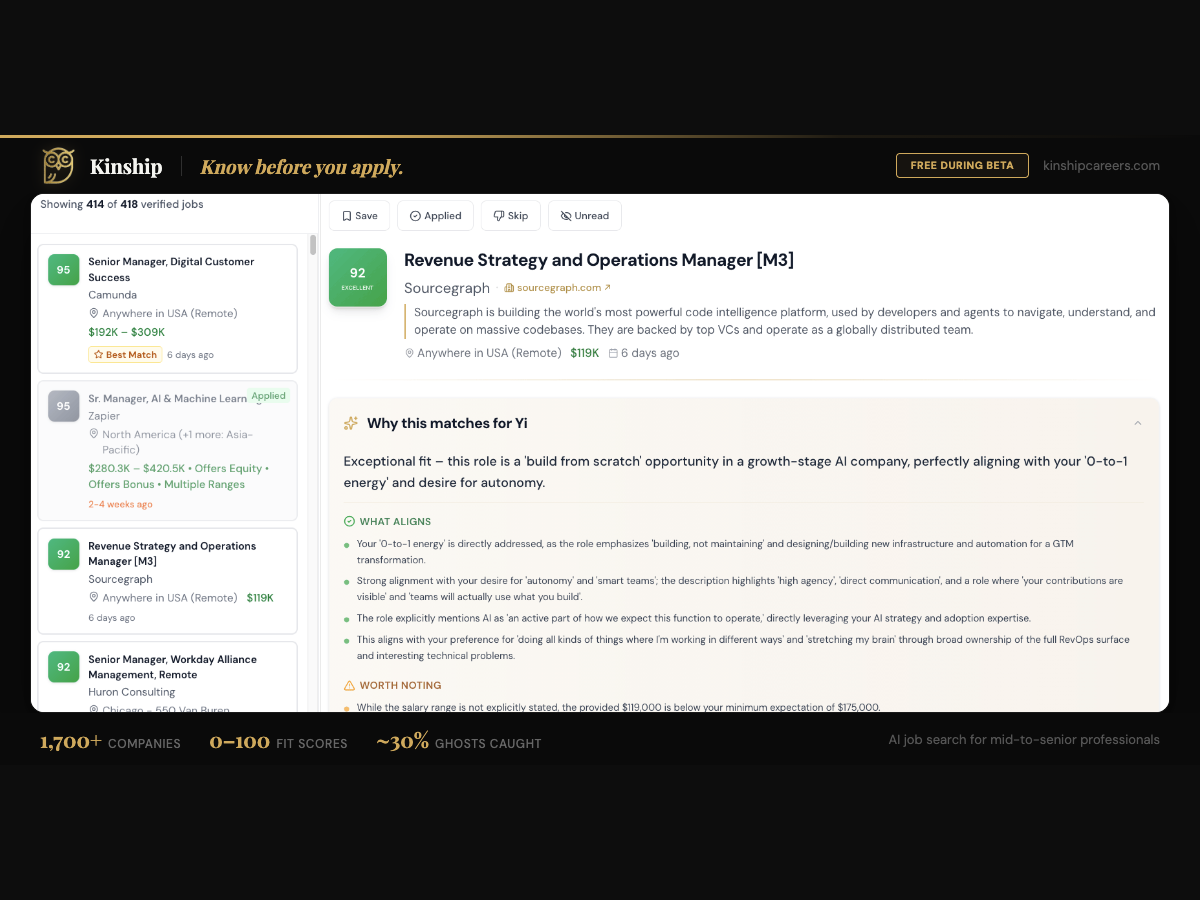
It moved fast for the same reason my other builds do. One person, no handoffs, like when I shipped Kinship Careers in 40 days or rebuilt this site from WordPress to Astro.
I came to you because I needed help, and you actually had the skills, the desire, and the energy to get me through the hump I was trying to get through. I’ve felt more energized about my business and its possibilities since we started working together.
Go see the work
If your product team is building fast and guessing at what users want, Jon is the person to call. He spent twenty years shipping products at Disney, MLB, and Perry Street by asking users first, and now he does that for client teams at levelupproduct.co. He is also back on LinkedIn, where you can watch the engine’s posts land in real time.
If your business has been sitting too
Jon did not need an AI strategy. He needed one painful problem solved: he could not talk about his own work in a way that traveled.
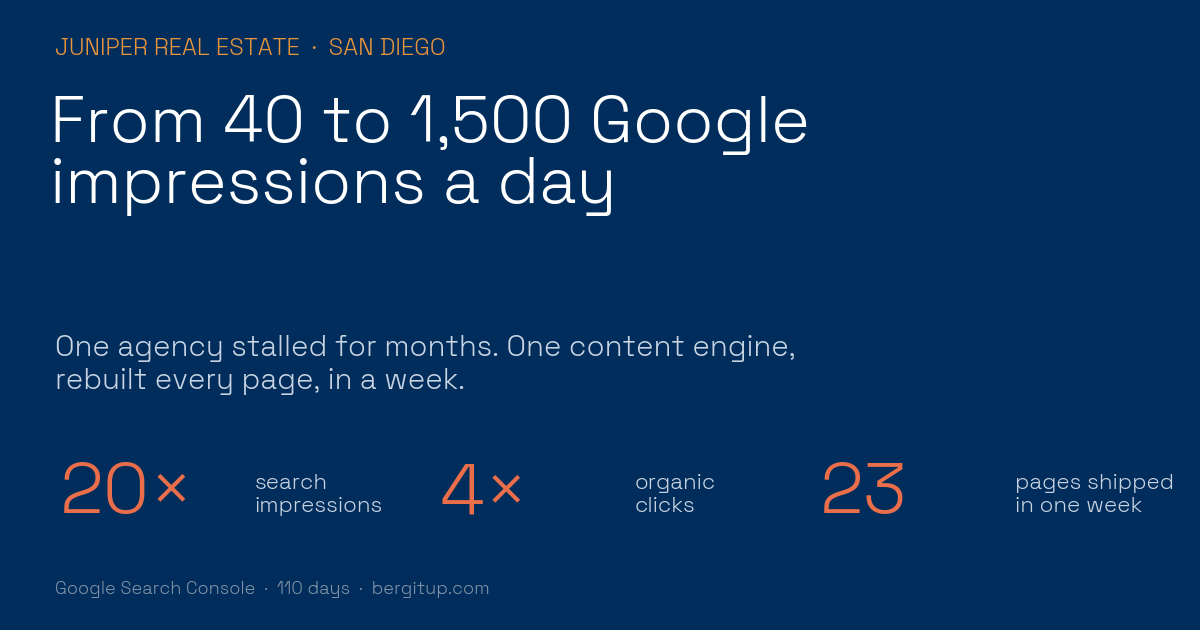
That is the work I do. I find the through-line in what you have already built, then build the system that puts it in front of the right people and hand you the keys. The same pairing, strategy plus engine, just took a stalled real estate site to 20x its search impressions in 110 days.
If you have real expertise and no good way to show it, that is what I build. Take a look at more of my work, or get in touch and we’ll figure out what yours needs.